Photo Essay / March 11, 2026

Why Meatpacking Workers, Some Facing Deportation, Voted to Strike

The workers at the JBS plant in Greeley, Colorado, voted overwhelmingly for a strike last month.
Mary Anne Andrei
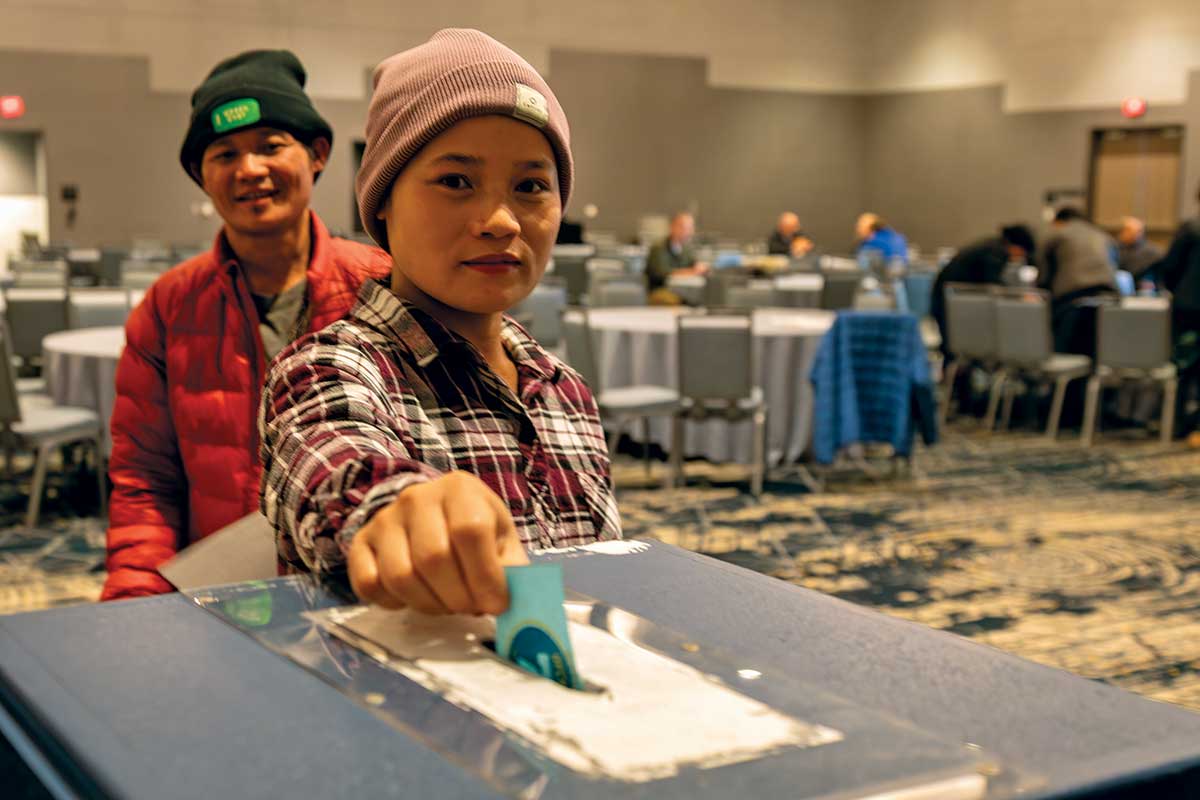
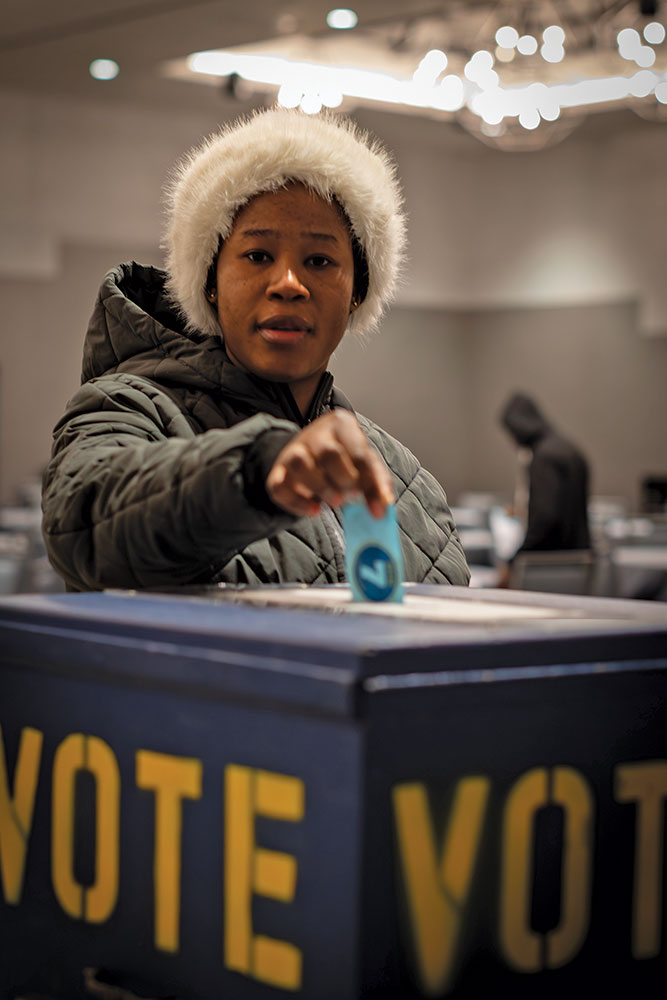
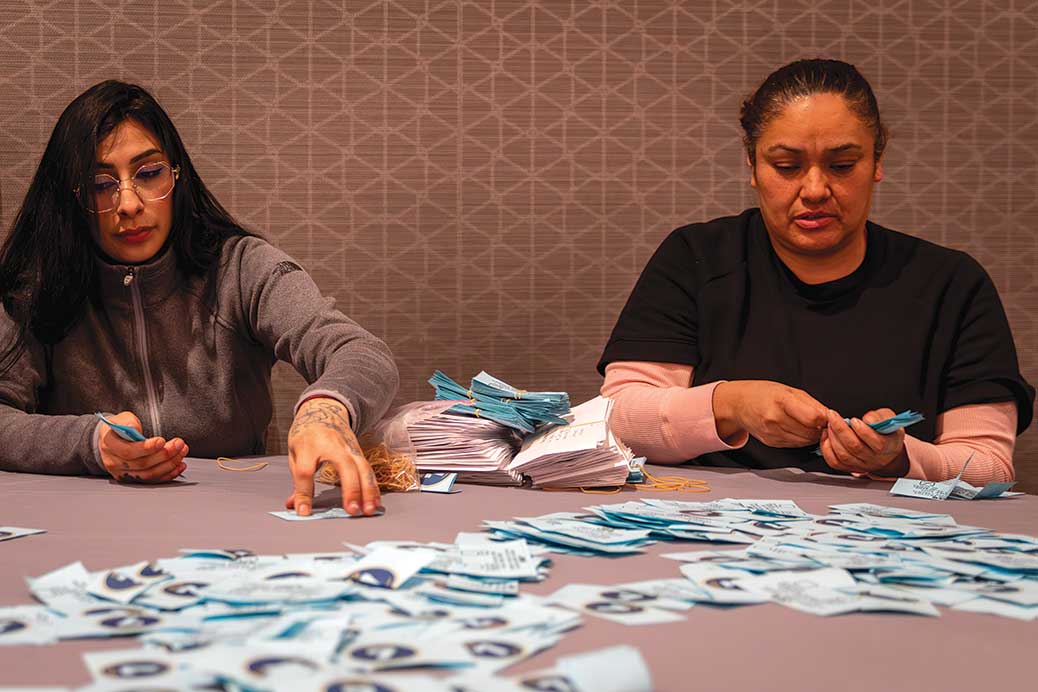
In the lobby of the hotel, workers were given a blue slip of paper with a simple choice: “Strike / Huelga” or “No Strike / No Huelga.”

In early February, more than 1,000 Haitian migrants employed at the unionized JBS meatpacking plant in Greeley, Colorado, faced imminent deportation, as the Trump administration fought in federal court to revoke their temporary protected status. Many of the Haitians say they were brought to JBS as part of a human-trafficking scheme concocted by a supervisor in the company’s HR department. (A JBS spokesperson told me there was no evidence tying the company to the union’s claims.)

Among them is Carlos Saint Aubin, who fled from the gangs in Port-au-Prince to Brazil, where he began a harrowing journey on foot—across the Darien Gap between Panama and Colombia, north to the US border. He came to Colorado after seeing TikTok videos promising jobs and housing. Instead, he ended up among the hundreds of Haitians packed more than six to a room at a roadside motel after working long hours. Now Saint Aubin is one of the lead plaintiffs in a class-action lawsuit alleging that the Haitians on the evening shift there were forced to work as much as 50 percent faster than those on the daytime crew.

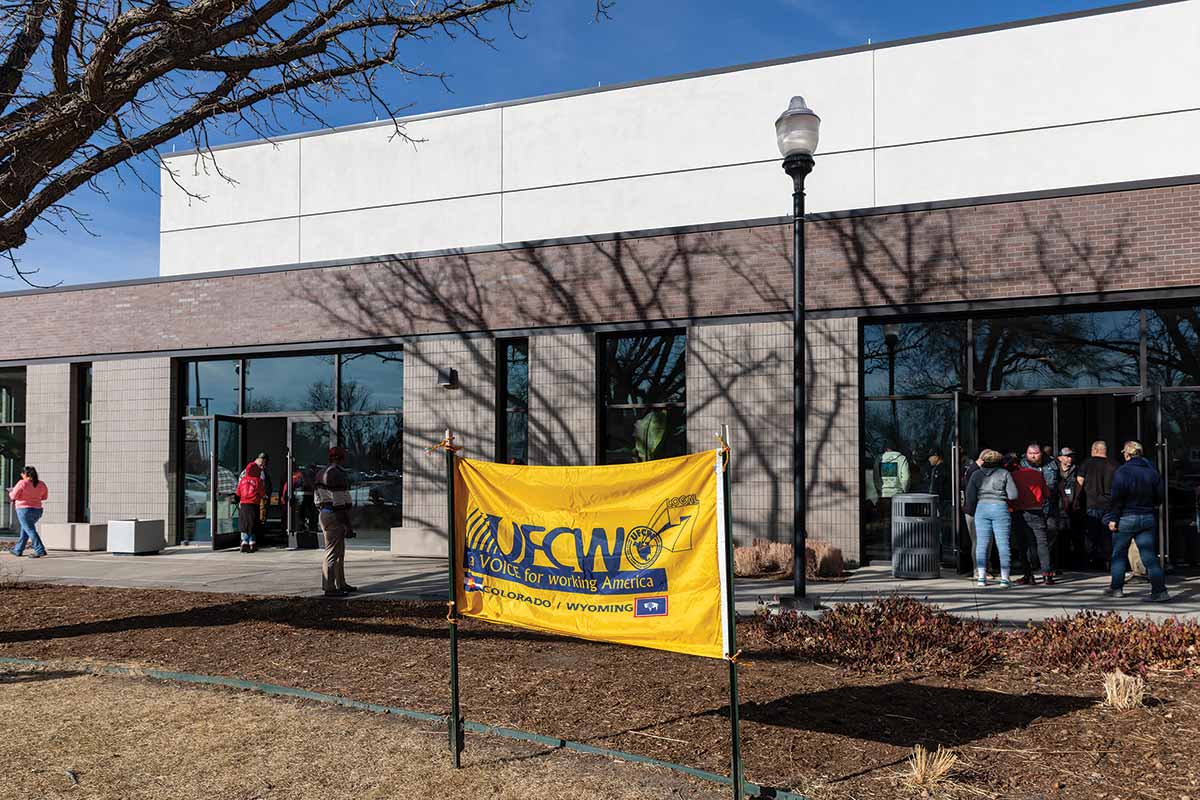
On February 4, less than 48 hours after a federal judge blocked their deportation, 99 percent of the United Food and Commercial Workers Union members at the facility voted to strike in what could become the first sanctioned walkout at a major meatpacking plant in decades.      —Ted Genoways
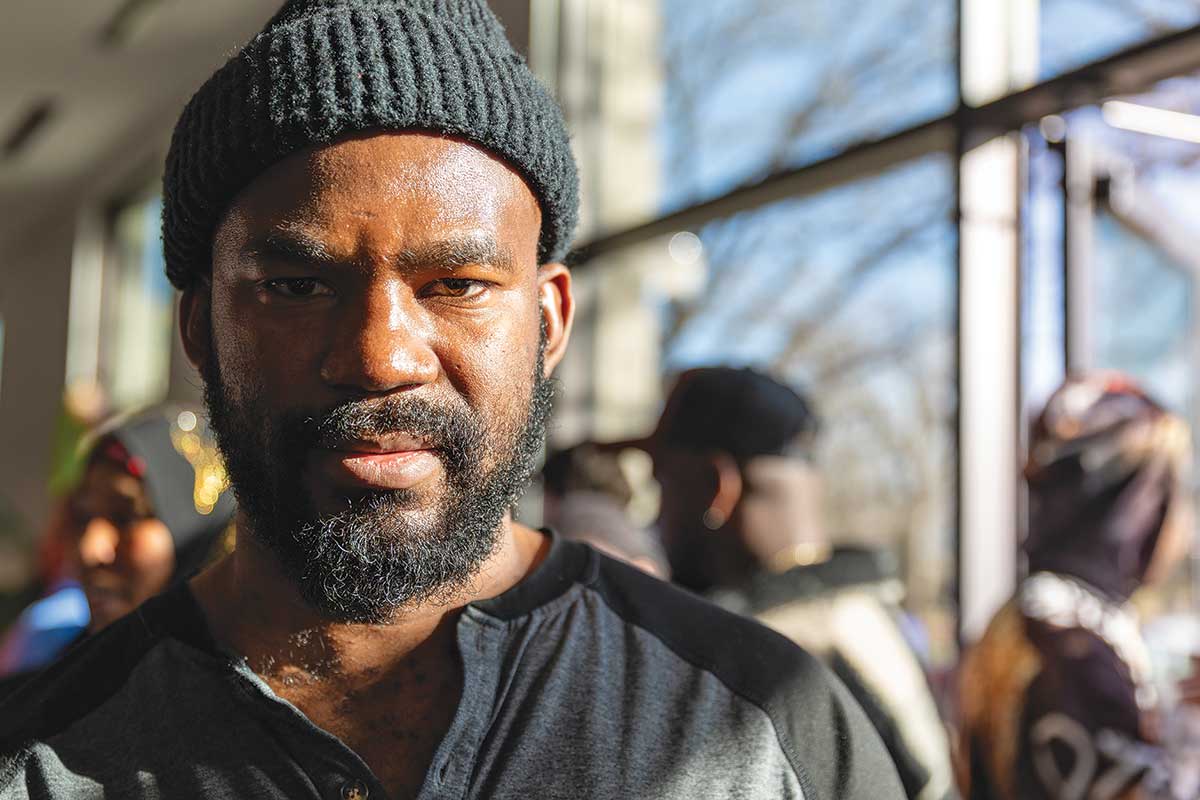
 

After casting his ballot, Carlos Saint Aubin chatted with fellow workers in the lobby outside the ballroom of the DoubleTree hotel where the vote was held.
Some 90 percent of the workers at JBS’s Greeley plant are migrants. Beyond Haiti, they are from Burma, Somalia, West Africa, and Latin America.
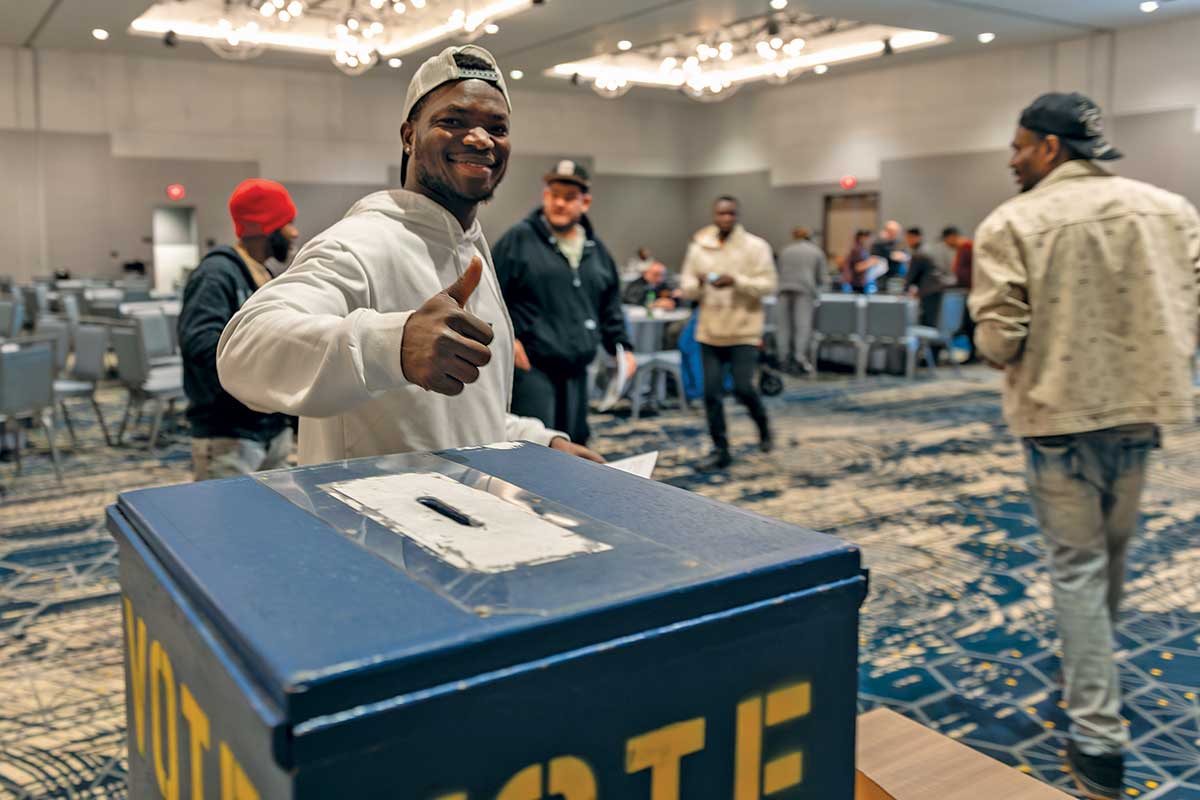
Despite facing threats from ICE—and the anxieties of a potential strike—workers greeted each other with hugs and handshakes.
Rumors circulated that unmarked white vans had been seen circling outside the hotel, raising fears of an ICE raid, but the vote was held without disruption.
Local 7 and JBS resumed talks on February 20 in hopes of avoiding a walkout, but the workers had already assembled 4,000 picket signs.
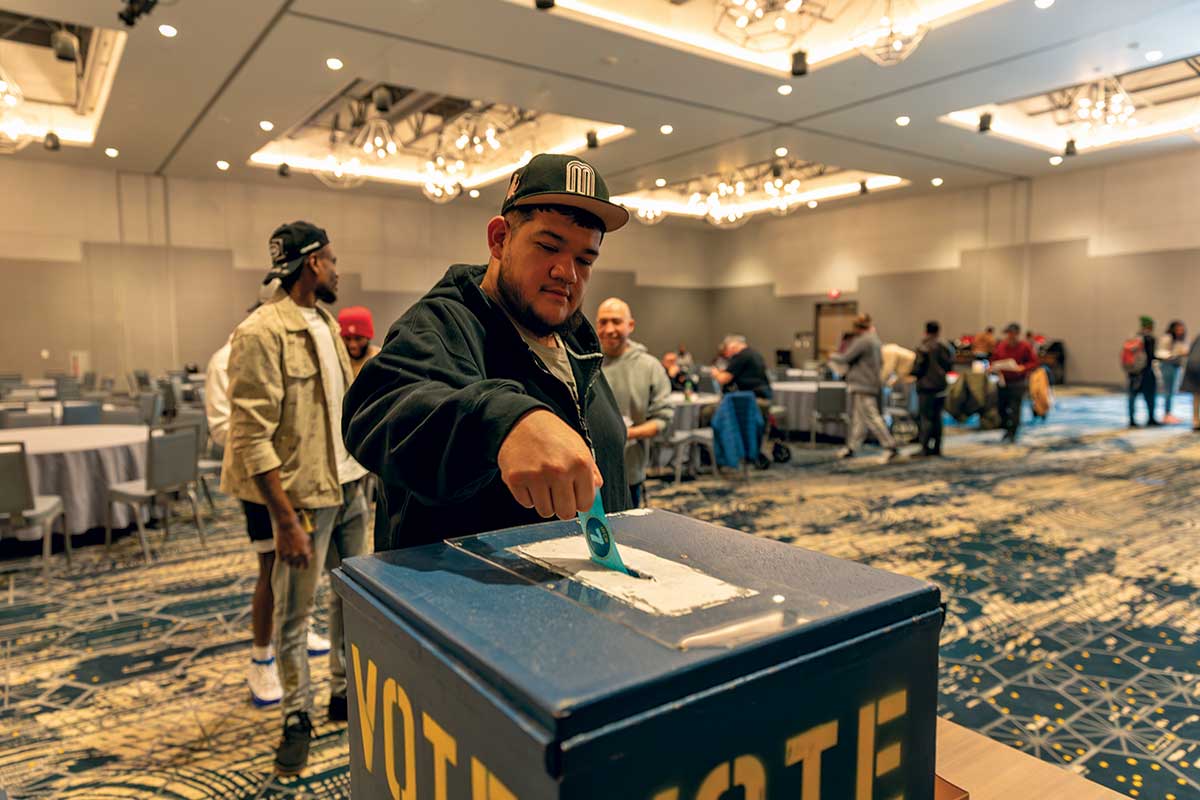
Members of Local 7 arrived just before 7 pm to count the votes. Out of the more than 2,000 workers who cast ballots, roughly 25 voted against a strike.

Support independent journalism that does not fall in line

Even before February 28, the reasons for Donald Trump’s imploding approval rating were abundantly clear: untrammeled corruption and personal enrichment to the tune of billions of dollars during an affordability crisis, a foreign policy guided only by his own derelict sense of morality, and the deployment of a murderous campaign of occupation, detention, and deportation on American streets. 

Now an undeclared, unauthorized, unpopular, and unconstitutional war of aggression against Iran has spread like wildfire through the region and into Europe. A new “forever war”—with an ever-increasing likelihood of American troops on the ground—may very well be upon us.  

As we’ve seen over and over, this administration uses lies, misdirection, and attempts to flood the zone to justify its abuses of power at home and abroad. Just as Trump, Marco Rubio, and Pete Hegseth offer erratic and contradictory rationales for the attacks on Iran, the administration is also spreading the lie that the upcoming midterm elections are under threat from noncitizens on voter rolls. When these lies go unchecked, they become the basis for further authoritarian encroachment and war. 

In these dark times, independent journalism is uniquely able to uncover the falsehoods that threaten our republic—and civilians around the world—and shine a bright light on the truth. 

The Nation’s experienced team of writers, editors, and fact-checkers understands the scale of what we’re up against and the urgency with which we have to act. That’s why we’re publishing critical reporting and analysis of the war on Iran, ICE violence at home, new forms of voter suppression emerging in the courts, and much more. 

But this journalism is possible only with your support.

This March, The Nation needs to raise $50,000 to ensure that we have the resources for reporting and analysis that sets the record straight and empowers people of conscience to organize. Will you donate today?
Mary Anne Andrei

Mary Anne Andrei is a freelance multimedia journalist.

More from The Nation

Kjell Inge Røkke mushes his dog team across the Bering Sea.

The Norwegian Billionaire Who Broke the Iditarod The Norwegian Billionaire Who Broke the Iditarod

Alaska’s last great race has struggled to keep up its finances and increase participation. Now, a $300,000 gift from an “expedition musher” promises to transform the event.

StudentNation / Colin Warren

The rebuilt Industrial Canal levee wall (L) in the Lower Ninth Ward stands near restored homes in New Orleans, Louisiana, on August 6, 2025.

The Lower Ninth Ward in New Orleans Can’t Get a Break The Lower Ninth Ward in New Orleans Can’t Get a Break

The neighborhood is facing an onslaught of catastrophic projects that could be more damaging than Hurricane Katrina.

Roberta Brandes Gratz

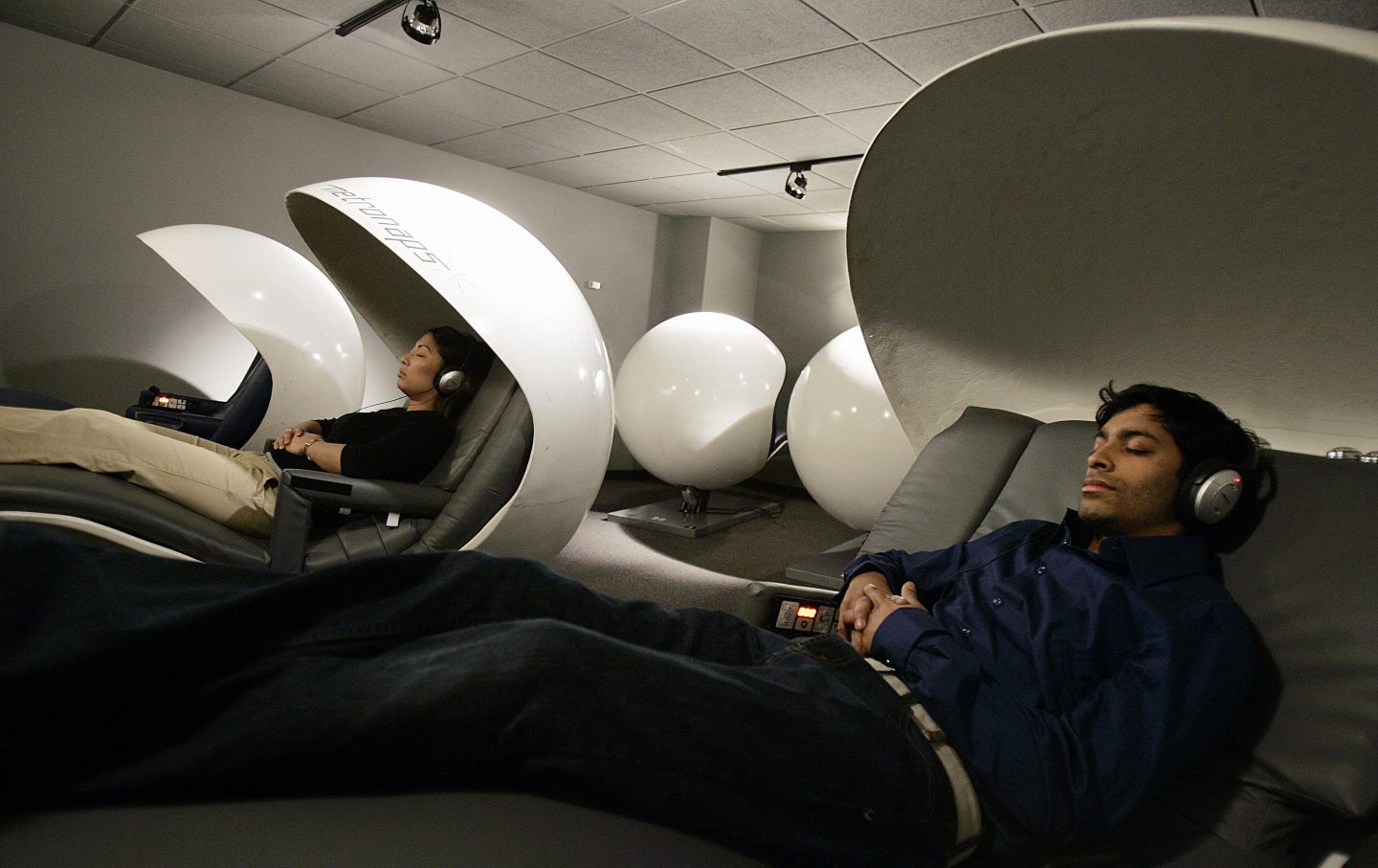
Employees demostrate sleeping “pods” in a corporate office.

The Nap Room Didn’t Love Me Back The Nap Room Didn’t Love Me Back

I left academia for a tech job that offered me the promise of stability. What happens when corporate employers become our most reliable caregivers?

Elizabeth Burns Dyer

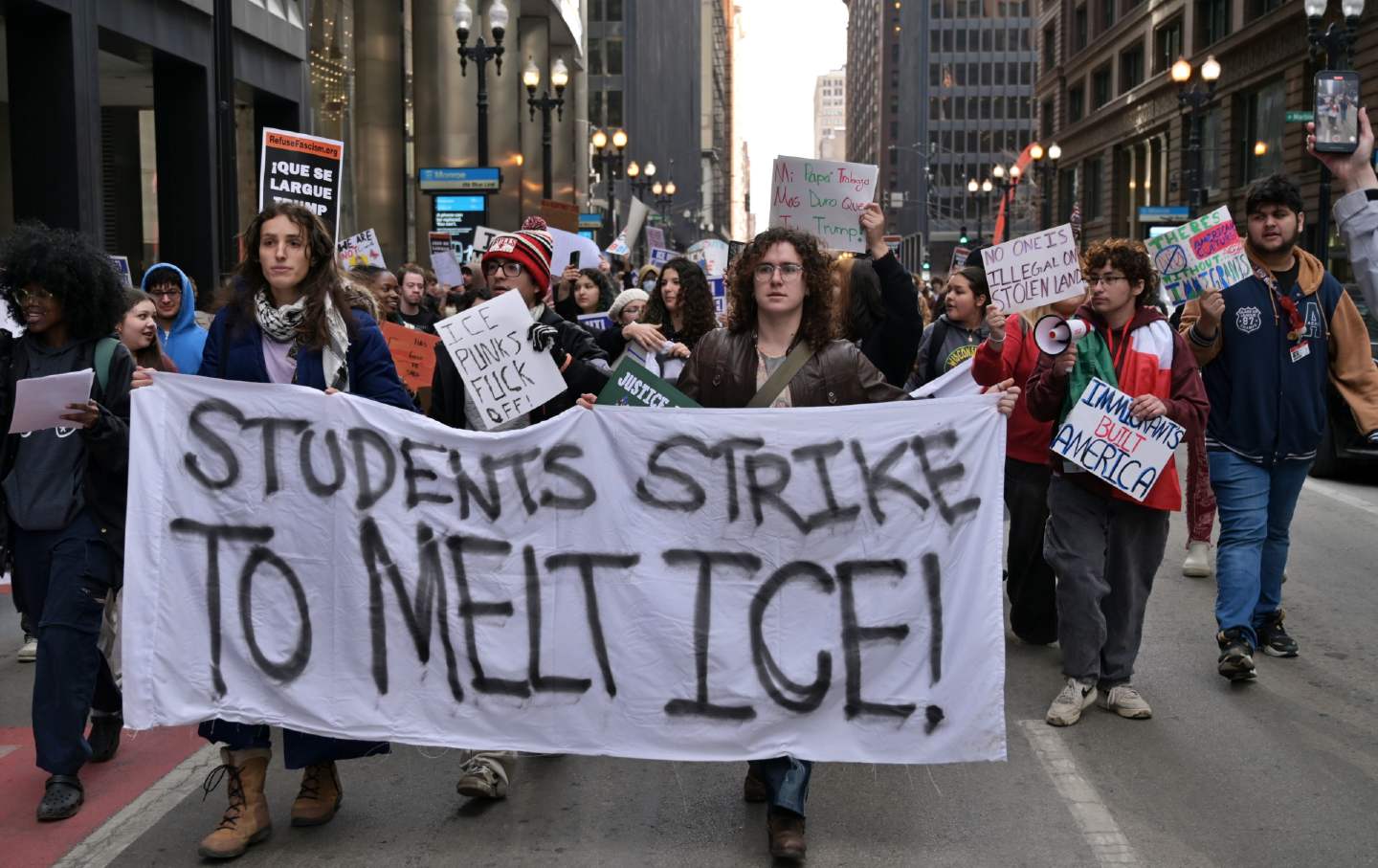
Students from across Chicago, including representatives from the School of the Art Institute of Chicago, gather to protest ICE.

The Immigration Crackdown Hurts More Than Just International Students The Immigration Crackdown Hurts More Than Just International Students

Universities are raising their tuition, offering fewer classes, and axing extracurricular programs to compensate for the dip in international student enrollment.

StudentNation / Yong-Yu Huang

A Landmark Suit Against Meta and YouTube Opens the Floodgate for AI Litigation

A Landmark Suit Against Meta and YouTube Opens the Floodgate for AI Litigation A Landmark Suit Against Meta and YouTube Opens the Floodgate for AI Litigation

A jury finds big tech liable for programming addictive features into platforms—and that’s basically the business model for companion bots.

David Futrelle

The Data Center Revolt

The Data Center Revolt The Data Center Revolt

Laura Flanders speaks with Faiz Shakir and John Cassidy on the grassroots fight against the AI oligarchs.

Q&A / Laura Flanders